
research• 9 min read
Wind Load & Structural Deflection in Large Architectural Picture Windows
NFRC & AAMA
Rated Assemblies
Energy Star v7.0
Glazing Options
Privacy Protected
SSL Inquiry
Clear Quote Request
Process
D
Dr. Evelyn Vance
Senior Building Physics Specialist • Published on 2026-03-24
Key Takeaways for Homeowners
- Large picture windows ($> 30\text{ sq ft}$) must be engineered to resist design wind pressures up to 50+ psf.
- ASTM E1300 determines maximum allowable glass center-of-span deflection (typically $L/175$).
- Thickened 6mm to 8mm tempered or heat-strengthened glass prevents edge seal blowout under cyclic wind gusts.
- Proper structural framing anchorage ensures loads transfer safely into building foundation studs.
## Structural Fenestration Engineering for Panoramic Glass
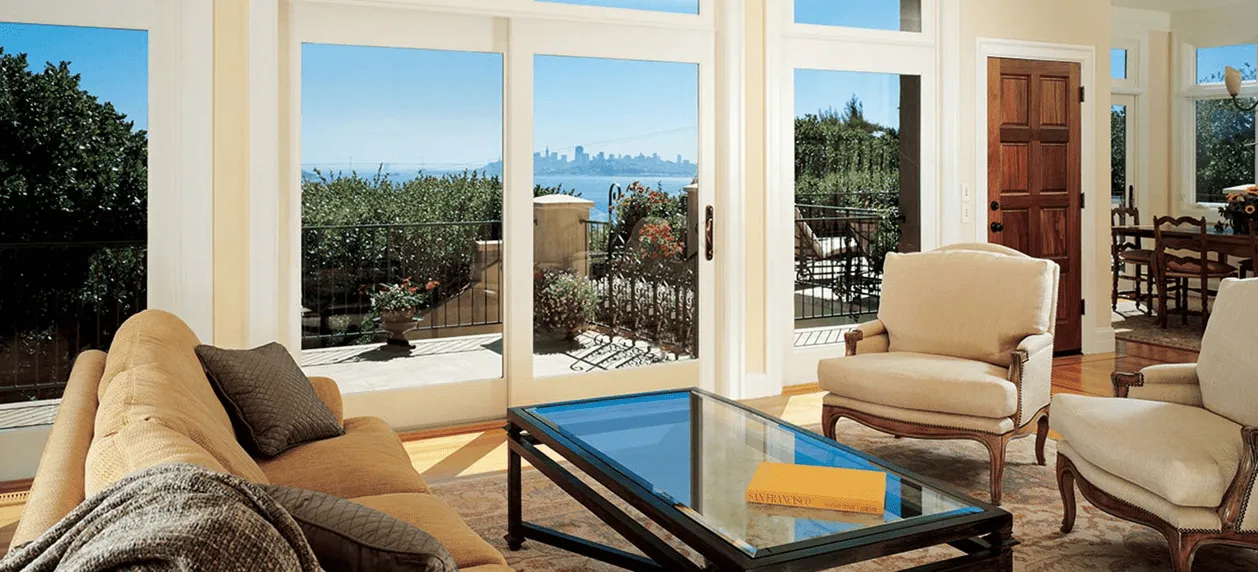
Expansive architectural picture windows provide stunning views and natural light. However, large glass surfaces act as structural sails during severe windstorms, experiencing immense positive pressure pushing inward and negative suction pulling outward.
### Engineering Calculations (ASTM E1300):
Structural glaziers calculate maximum allowable load resistance based on:
- **Aspect Ratio:** Length-to-width ratio of the rectangular glass opening.
- **Glass Thickness:** Upgrading from standard 3mm (1/8") glass to 6mm (1/4") or 8mm (5/16") tempered glass increases load resistance exponentially.
- **Deflection Limits:** Deflection must not exceed $1/175$ of the span to prevent the glass from dislodging from the frame rebate.
ServiceFind Windows Pro engineers custom large-format picture windows with full safety certification. Call for a **Fair Quote**.
Have Questions About Your Windows?
Speak directly with a certified ServiceFind Windows Pro technician. We provide upfront, transparent Fair Quotes with zero sales pressure.
Related Educational Articles
research
Read ArticlePubMed PMC6013210 Analysis: How High-Performance Windows Elevate Indoor Air Quality
A clinical and engineering review of peer-reviewed research linking insulated glazing to lower indoor particulate penetration, humidity control, and mold eradication.
research
Read ArticleDOE Residential Window Study: Analyzing National Energy & Carbon Reductions
Reviewing US Department of Energy & NREL datasets on residential window heat loss, carbon emission offsets, and the economics of Energy Star v7.0.
research
Read ArticleAcoustic Attenuation & Cardiovascular Health: Reviewing NIH Environmental Noise Studies
How blocking exterior urban traffic noise with high-STC double-pane windows reduces nighttime cortisol surges, sleep disruption, and hypertension.